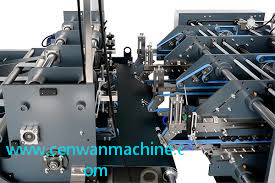
A packaging production manager faces an unwelcome sight—the folding and gluing line stands idle, boxes stacked unfinished, and orders pending. The Box Folder Gluer Machine stopped without warning, and the repair crew estimates hours before production resumes. This scenario raises an urgent operational question. How frequently should preventive maintenance occur to avoid such costly interruptions? The answer depends on several interrelated factors, and CenwanMachine, operated by Zhejiang Chengwang Intelligent Packaging Equipment Co., Ltd., provides equipment designed for predictable service intervals.
The manufacturer's recommended maintenance schedule serves as the foundation for any preventive program. Each Box Folder Gluer Machine arrives with a service manual specifying daily, weekly, monthly, and annual inspection points. These recommendations reflect the engineering team's understanding of component wear rates, lubrication requirements, and critical adjustment points. Following this baseline schedule ensures that the machine operates within its design parameters, but production environments vary significantly, requiring adjustments to the factory recommendations. The operator's experience and the machine's actual working conditions determine whether to shorten or extend the suggested intervals.
Production volume directly influences how often a Box Folder Gluer Machine requires preventive attention. A line running three shifts per day, five days per week, experiences component wear at roughly three times the rate of a single-shift operation. The folding belts, glue nozzles, drive chains, and pressure rollers all degrade faster under continuous operation. High-volume producers must schedule inspections more frequently, perhaps weekly checks instead of monthly, to catch developing issues before they escalate into failures. The maintenance calendar must align with actual running hours rather than calendar days, because idle time does not consume component life.
Material types processed through the Box Folder Gluer Machine affect wear patterns and maintenance needs. Corrugated board generates dust and abrasive particles that accumulate on rollers, sensors, and drive components. This debris accelerates wear on moving parts and interferes with sensor accuracy. Coated or laminated papers require different glue formulations that may leave residues requiring more frequent cleaning. The maintenance schedule must account for these material-specific factors, with additional cleaning intervals for dusty materials and more regular adhesive system checks for difficult substrates. The operator who processes multiple material types must adjust service frequency to accommodate the most demanding conditions.
The machine's age and cumulative operating hours provide critical maintenance scheduling information. New equipment typically requires more frequent initial inspections to verify that all adjustments remain stable during the break-in period. Once the Box Folder Gluer Machine settles into operation, service intervals can extend to the manufacturer's standard recommendations. However, as the machine accumulates years of service, certain components approach their design life limits. Bearings, belts, and electronic components degrade gradually, requiring more frequent monitoring in later years. A maintenance history log helps predict when these aging-related failures might occur, allowing preemptive replacement before unexpected breakdowns.
Environmental conditions around the Box Folder Gluer Machine significantly impact maintenance frequency. Temperature fluctuations, humidity levels, and airborne dust all affect machine performance and component longevity. High humidity accelerates corrosion on metal parts and affects adhesive curing properties. Extreme temperatures alter lubricant viscosity and material dimensions. Factories in harsh environments must adopt more frequent service intervals to compensate for these external stresses. The maintenance program should include environmental monitoring to adjust schedules when seasonal or operational changes affect the production area.
Operator observations and machine performance data offer real-time indicators for maintenance timing. Experienced operators notice subtle changes in folding accuracy, glue pattern consistency, or unusual sounds during operation. These observations provide early warnings that preventive maintenance should occur sooner than the scheduled interval. Modern Box Folder Gluer Machine controls collect operational data, including cycle counts, jam frequency, and speed variations, that indicate developing problems. Analyzing this data enables condition-based maintenance, where service occurs when specific parameters indicate wear rather than on a fixed calendar schedule. This approach optimizes maintenance frequency, avoiding both unnecessary service and unexpected failures.
The availability of spare parts and service support influences maintenance planning. Factories located near reliable suppliers can adopt slightly more aggressive operating schedules, knowing that replacement parts and technical assistance remain readily available. Remote operations or those in areas with limited service access must adopt more conservative maintenance intervals, performing inspections more frequently to identify issues while they remain manageable. The maintenance program should include inventory management for critical spare parts, ensuring that commonly replaced components remain in stock when needed. This preparation reduces the downtime associated with both scheduled and unscheduled maintenance events.
The cost of downtime relative to maintenance expenses determines the optimal service frequency for each operation. Production lines with high throughput and tight delivery schedules cannot afford even short interruptions, justifying more frequent preventive maintenance to maximize uptime. Operations with excess capacity or flexible delivery schedules might accept slightly higher risk of breakdowns in exchange for lower maintenance costs. The financial analysis compares the expense of preventive service against the potential losses from unplanned stoppages. This calculation yields a maintenance frequency that balances reliability and cost for each specific production environment.
CenwanMachine provides equipment that supports flexible maintenance scheduling through robust construction and accessible service points. The modular design allows quick component replacement, reducing the time required for preventive procedures. The technical support team offers guidance on tailoring maintenance intervals to individual production conditions. At https://www.cenwanmachine.com/product/folder-gluer-for-stereo-box/, visitors find detailed specifications that inform maintenance planning for diverse box styles. Understanding these factors transforms maintenance from a routine chore into a strategic tool for operational reliability. The thoughtful production manager evaluates all these variables to create a maintenance schedule that prevents unexpected downtime, controls costs, and extends equipment life. This planned approach ensures that the Box Folder Gluer Machine remains productive rather than problematic, supporting consistent output and satisfied customers.