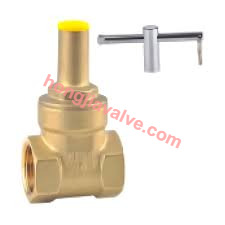
A valve designed for standard water or gas lines works perfectly when internal pressure exceeds external pressure, because any leak pushes fluid out where a technician can see and fix it. However, a ball valve installed in a vacuum service faces the opposite condition, with external atmospheric pressure trying to push air into the empty line, and that reversal turns every joint and seal into a potential entry point for invisible leakage. A hongjiavalve unit, manufactured by HongJia, must address two critical leak paths that behave differently under vacuum compared to positive pressure: the stem packing where the rotating shaft exits the body, and the body joints where two housing halves come together. When a system requires vacuum down to a few pascals and any air ingress ruins the process, does a standard valve from a plumbing supplier stand any chance of holding that seal?
The stem packing represents the first challenge in vacuum service because the design relies on compressed rings of PTFE or similar material to seal around a rotating shaft. Under positive pressure, internal fluid pushes those rings outward against the stem and the packing gland, actually improving the seal as pressure rises. Under vacuum, the opposite happens, external air pressure pushes the packing rings inward, away from the stem and gland surfaces, creating microscopic gaps that allow air molecules to creep past. HongJia's solution involves a live-loaded packing system that maintains constant compression on the rings regardless of pressure direction, using a stack of Belleville washers or a coiled spring that keeps force on the packing even when internal pressure drops to zero or below. A standard gland with simple bolt compression relaxes over time and under thermal cycling, but the live-loaded design adapts to movement and temperature changes while preserving the stem seal.
The second leak path involves the body joint, where two halves of the ball valve thread or bolt together. In a two-piece or three-piece ball valve design, a gasket sits between the body sections, and under positive pressure, internal fluid compresses that gasket against the mating surfaces. Under vacuum, atmospheric pressure pulls the body halves apart slightly, reducing compression on the gasket and creating a potential path for air to enter. HongJia's manufacturing process addresses this by using precisely machined body threads with sealant applied during assembly, or by employing a one-piece body design that eliminates the center joint entirely for smaller valve sizes. For larger valves where a one-piece body is impractical, HongJia uses a tongue-and-groove gasket seating surface that maintains alignment and compression even when the body experiences tensile load from vacuum.
The surface finish of the ball itself also affects vacuum performance because any scratch or porosity can trap air or allow slow leakage across the seat. A ball valve intended for vacuum service requires a mirror finish on the chrome-plated or stainless steel ball, measured in microinches of surface roughness. HongJia's polishing process uses multiple stages of abrasive compounds to achieve a finish that allows the soft PTFE seats to conform completely to the ball surface, creating a bubble-tight seal in both directions. A rough ball leaves microscopic channels that act like tiny straws, pulling air from the upstream side to the downstream side even when the valve is fully closed.
The choice of seat material becomes critical under vacuum because some polymers outgas or deform over time. Standard seat materials like PTFE work well for many vacuum applications, but they must be virgin grade without fillers that could release gases into the clean environment. HongJia offers seats machined from high-density PTFE that has been vacuum-baked to remove absorbed moisture and volatile compounds before assembly. This pre-treatment ensures that when the valve sits in a closed position for weeks, it does not contaminate the vacuum chamber with outgassed hydrocarbons or water vapor.
Another factor that distinguishes a vacuum-rated valve from a standard unit is the testing procedure. A valve that passes a bubble test under water for positive pressure may still leak under vacuum because bubbles form only when internal pressure exceeds external pressure. HongJia tests its vacuum-service valves using a helium mass spectrometer, a device that detects helium atoms passing through a seal from the outside into an evacuated valve. A valve that shows no measurable helium ingress at sensitivity levels down to one times ten to the minus nine standard cubic centimeters per second qualifies for high-vacuum service. A standard bubble test would miss leaks of that size entirely, giving false confidence to an operator who installs a non-rated valve in a vacuum system.
For applications involving ultra-high vacuum or aggressive gases, HongJia offers all-welded body constructions and metal diaphragm stem seals that eliminate polymer components entirely. These valves use no soft seats or packing rings, relying instead on metal-to-metal sealing surfaces that tolerate bake-out temperatures required to remove surface contamination. The stem rotates on precision bearings, and the sealing force comes from a spring pack that maintains closure even when the valve is not pressurized.
To see how HongJia's ball valve performs under actual vacuum conditions with helium leak testing and live-loaded stem packing, visit their technical catalog at https://www.hongjiavalve.com/product/ball-valve-series/ where you will find vacuum-specific models, size ranges, and material certifications for clean service. A valve that seals perfectly under positive pressure may become a vacuum leak overnight. A valve designed from the start for negative pressure, with anti-blowout stems, polished balls, and helium-tested bodies, protects your process from the first evacuation to the final vent. When a single microscopic leak can ruin a vacuum run that took hours to achieve, would you trust a standard plumbing valve to hold that line?