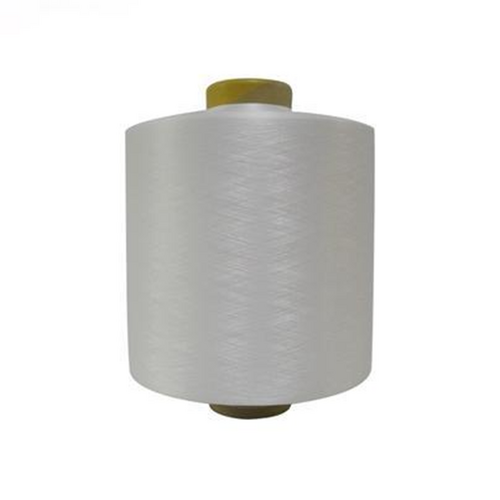
The distinctive property of Air Covering Yarns stems from specific manufacturing processes designed to maximize the incorporation of air spaces within the yarn cross-section. A prevalent method is the hollow spindle covering system. In this setup, a core material—often a continuous filament providing strength and elasticity—passes through a stationary hollow spindle. Simultaneously, one or more strands of drafted staple fibers (like cotton, wool, or acrylic) are fed into the spindle. As the spindle rotates at high speed, it wraps these sheath fibers around the stationary core with a false twist, creating a uniformly covered yarn where the sheath fibers are not tightly packed, thus preserving loft and air pockets.
Another approach involves modified ring spinning or air-jet texturing. Certain ring-spun yarns can be made bulkier through fiber selection and specialized drafting. Air-jet texturing, typically used for filaments, can also create looped structures that trap air, which may then be combined with other yarns. The choice of sheath fibers greatly influences the final yarn's hand and performance; fine, crimped fibers like merino wool or high-loft acrylic are excellent for creating soft, insulating air spaces. The core filament, while often hidden, provides essential tensile strength and recovery, preventing the lofty sheath from breaking or losing its structure during knitting, weaving, or wear.
Quality control focuses on consistency of coverage, loft, and strength. The successful production of Air Covering Yarns relies on precise control over spindle speed, fiber feed rates, and tension. This technical process transforms ordinary fibers into yarns with engineered internal architecture. The manufacturing precision behind Air Covering Yarns is crucial for achieving their defining combination of lightweight bulk and durability, enabling their use in both fashion and technical textile applications.