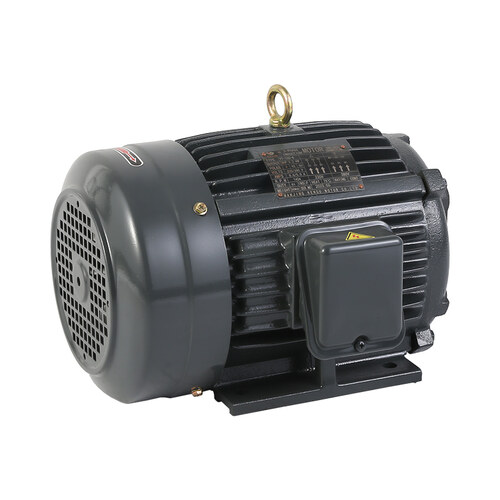
The widespread adoption of the asynchronous motor is largely due to its straightforward and sturdy physical construction. The motor comprises two main sections: the stator and the rotor. The stator is the stationary outer shell. Its core is made from laminated steel sheets to minimize energy losses, and it houses carefully wound copper coils. When three-phase AC power is supplied to these windings, they generate a smoothly rotating magnetic field that is the engine’s primary driving force.
Inside the stator resides the rotor. The most prevalent type is the squirrel-cage rotor. Its name derives from its shape: a cylinder of laminated steel with conductive bars (typically aluminum or copper) embedded in slots along its length. These bars are permanently and solidly connected at both ends by a shorting ring, forming a complete electrical circuit that resembles a cage. This is a supremely robust design with no brushes, slip rings, or other wearing electrical contacts. The rotating magnetic field from the stator induces currents directly into this cage, creating the force that turns the shaft.
While the basic asynchronous motor operates at a nearly constant speed when connected directly to the power line, its fundamental durability makes it an ideal platform for modern control systems like variable frequency drives, which can electronically manage its speed and torque for advanced applications.