
POE 1 is widely regarded as one of the most complex and content-rich action RPGs ever created. Set in the dark and unforgiving world of Wraeclast, the game pushes players into a brutal environment where survival depends on knowledge, planning, and adaptability. It is not a game that holds the player’s hand; instead, it rewards experimentation, patience, and deep understanding of its systems.
At the heart of POE 1 lies its enormous passive skill tree. This sprawling web of nodes allows for an extraordinary level of character customization. Players can shape their builds in countless directions, focusing on damage, defense, utility, or hybrid approaches. Every point allocated matters, and even small decisions can significantly influence endgame performance. This freedom is both empowering and intimidating, especially for new players, but it is also what gives POE 1 its long-lasting appeal.
Another defining system in POE 1 is its skill gem mechanic. Instead of unlocking abilities through levels alone, players use gems that can be socketed into equipment to gain active skills. These gems can be linked with support gems to modify and enhance their behavior. This creates an almost limitless combination of abilities, allowing players to design highly specialized builds. The interaction between skill gems and support gems is one of the most innovative systems in the genre.
Combat in POE 1 is fast-paced and highly demanding. Players must constantly manage positioning, resource usage, and enemy threats. The difficulty increases steadily as the game progresses, requiring stronger gear and more refined builds. Boss encounters are particularly challenging, often requiring precise movement and a deep understanding of mechanics. Success is rarely accidental; it comes from preparation and execution.
The loot and crafting system in POE 1 is another major pillar of its design. Instead of traditional gold, the game uses a variety of currency items that serve both as trading tools and crafting resources. This system creates a complex economy driven entirely by player interaction. Crafting allows for deep customization of gear, enabling players to fine-tune their equipment for specific builds or endgame goals.
Endgame content is where POE 1 truly shines. The mapping system offers nearly endless replayability, with randomized layouts, modifiers, and escalating difficulty. Each map run feels different, keeping the experience fresh even after hundreds of hours. Seasonal leagues introduce new mechanics and systems, constantly reshaping the gameplay and encouraging players to return regularly.
Multiplayer interaction plays a significant role in POE 1 as well. Players trade items, share knowledge, and cooperate in difficult encounters. The economy is entirely player-driven, making market awareness an important part of progression.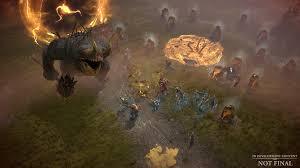
Visually, POE 1 embraces a dark, gritty aesthetic that reflects the harshness of Wraeclast. The environments are bleak and oppressive, reinforcing the game’s tone of survival and struggle.
Path of Exile 3.28 Currency stands as a benchmark for depth and complexity in action RPG design. Its systems are dense, its challenges demanding, and its possibilities nearly endless, making it a game that continues to engage dedicated players for years.